At a Glance: Selecting the right ammo is key to getting the best performance from your gun. Different types, like full metal jacket (FMJ) and hollow point bullets, offer varying benefits in terms of expansion, speed, and accuracy. Understanding these differences will help you choose the right ammo for your firearm and the job at hand.
Choosing the right ammunition can significantly affect how your firearm performs. With so many options available, it can be overwhelming to know which ammo is best suited for your needs. Ammo is designed for various purposes, from hunting and target practice to self-defense, so understanding these differences will help you make a more informed decision and get the most out of your firearm.
In this guide, we’ll break down what makes a bullet, some of the most common types of ammo, like FMJ, hollow points, and more. We’ll go over how each type affects your shooting experience, so you can pick the best option for your needs.
What Makes Every Bullet Different?
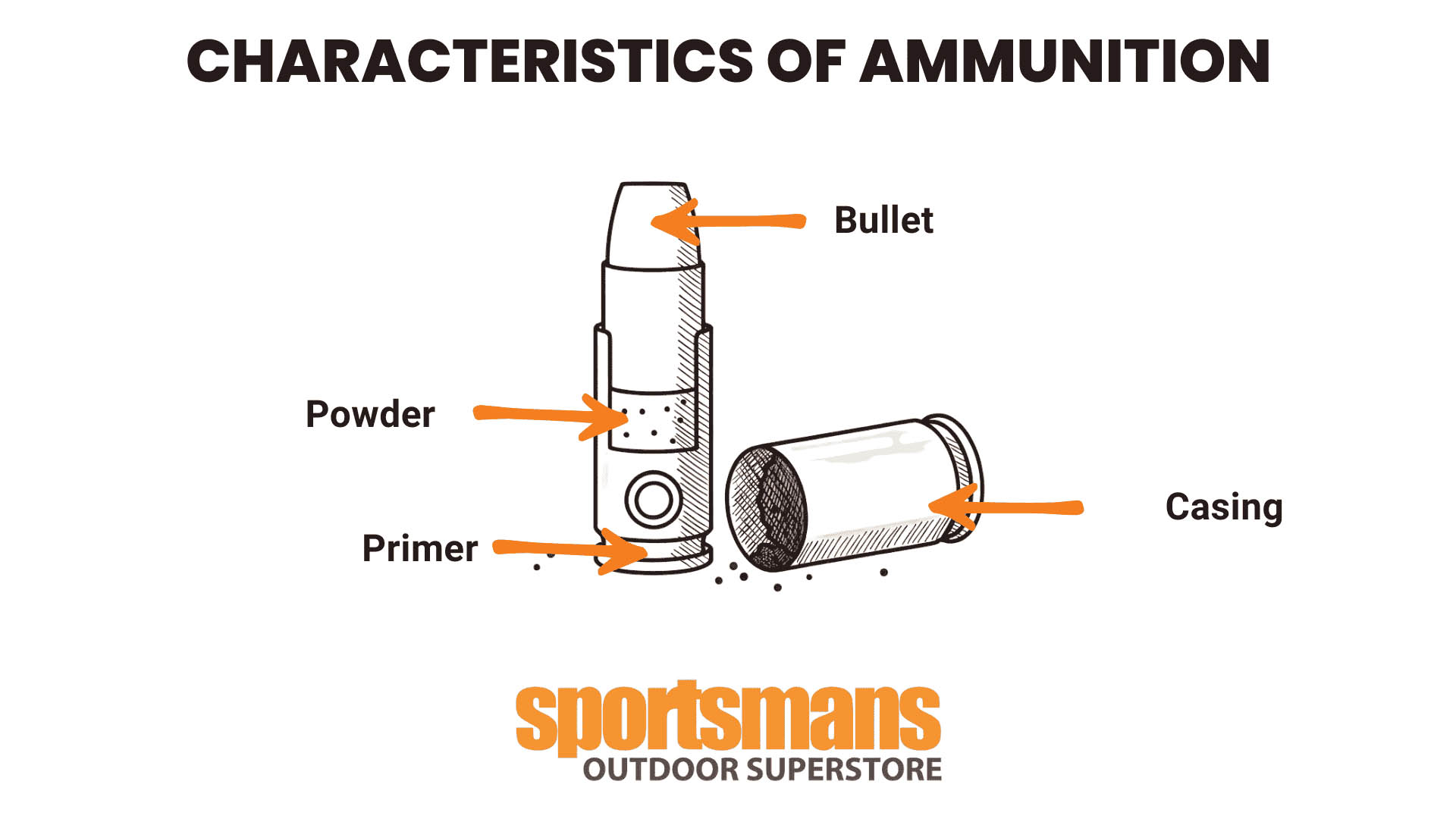
Before diving into the various types of bullets, it's helpful to understand the key characteristics that make each bullet unique. Here’s what to look for:
- Caliber: The diameter of the bullet, which also indicates what caliber gun it’s compatible with.
- Bullet Design: The shape and structure of the bullet affect how it performs on impact.
- Bullet Weight: The weight of the bullet, measured in grains, determines its speed, accuracy, and energy transfer.
- Core Material: The core is the central part of the bullet, and its material plays a key role in determining the bullet's performance.
- Jacket Type: The jacket is the outer layer that encases the bullet's core. It affects how the bullet feeds into the chamber and performs upon impact, helping to reduce barrel wear and improve accuracy.
These traits affect how the bullet performs in different situations, whether for target shooting, self-defense, or hunting.
Caliber
Caliber refers to the diameter of the bullet and the size of the firearm’s barrel. Measured in millimeters or inches (e.g., 9mm, .45 caliber), it determines which bullets are compatible with your firearm and affects performance factors like recoil, velocity, and stopping power.
Larger vs. Smaller Calibers
Larger calibers (e.g., .44 Magnum, .50 BMG) provide more stopping power, making them suitable for hunting large game and self-defense. However, they tend to produce more recoil, making them harder to control, especially during rapid firing.
Smaller calibers (e.g., 9mm, .22 LR) are easier to manage and more affordable. They are ideal for target practice, small game hunting, or self-defense in situations where recoil control is important.
Popular Caliber Choices
- 9mm: A popular choice for self-defense and law enforcement, offering a good balance of power and recoil.
- .22 LR: Known for its low cost and low recoil, making it ideal for beginners, target shooting, and small game hunting.
- 5.56 NATO: Common in tactical rifles, used for long-range shooting and hunting medium-sized game.
- .308 Winchester: A powerful round for hunting larger game and precision shooting at longer ranges.
Caliber Compatibility
It’s important to always check that your firearm is chambered for the correct caliber. Some rounds, like .223 Remington and 5.56 NATO, may appear similar but can have different pressure ratings, so using the wrong one can damage your firearm or cause harm around you.
Bullet Types
Here's a quick comparison of common bullet types and their uses:
| Bullet Type | Design | Best For | Key Characteristics |
|---|---|---|---|
| Full Metal Jacket (FMJ) | A soft lead core surrounded by a hard outer jacket (usually copper). | Target practice, military | Reliable feeding, minimal expansion, good for long-range shooting. |
| Hollow Point | A concave tip that causes expansion upon impact. | Self-defense, law enforcement | Expands to cause maximum tissue damage and energy transfer. |
| Soft Point | A lead core with a partially exposed tip that expands on impact. | Hunting (medium-large game) | Controlled expansion for deeper penetration, often used for hunting. |
| Boat Tail | A tapered rear design for improved aerodynamics and long-range stability. | Long-range shooting, hunting | Better accuracy and stability at long distances due to reduced drag. |
| Ballistic Tip | A polymer tip that improves aerodynamics and causes expansion on impact. | Hunting, varmint shooting | Ideal for hunting with precise expansion and high velocity. |
| Round Nose | A smooth, rounded tip with no expansion. | Older firearms, target shooting | Less prone to expansion, easier feeding in older firearms. |
Choosing the Right Bullet Type
- Self-Defense: Hollow points or soft points are preferred for maximum stopping power and reduced risk of over-penetration.
- Target Practice: Full metal jacket (FMJ) is ideal due to its cost-effectiveness and consistent performance.
- Hunting: Soft point or ballistic tip bullets are popular for ethical kills, offering controlled expansion and adequate penetration.
Bullet Weight
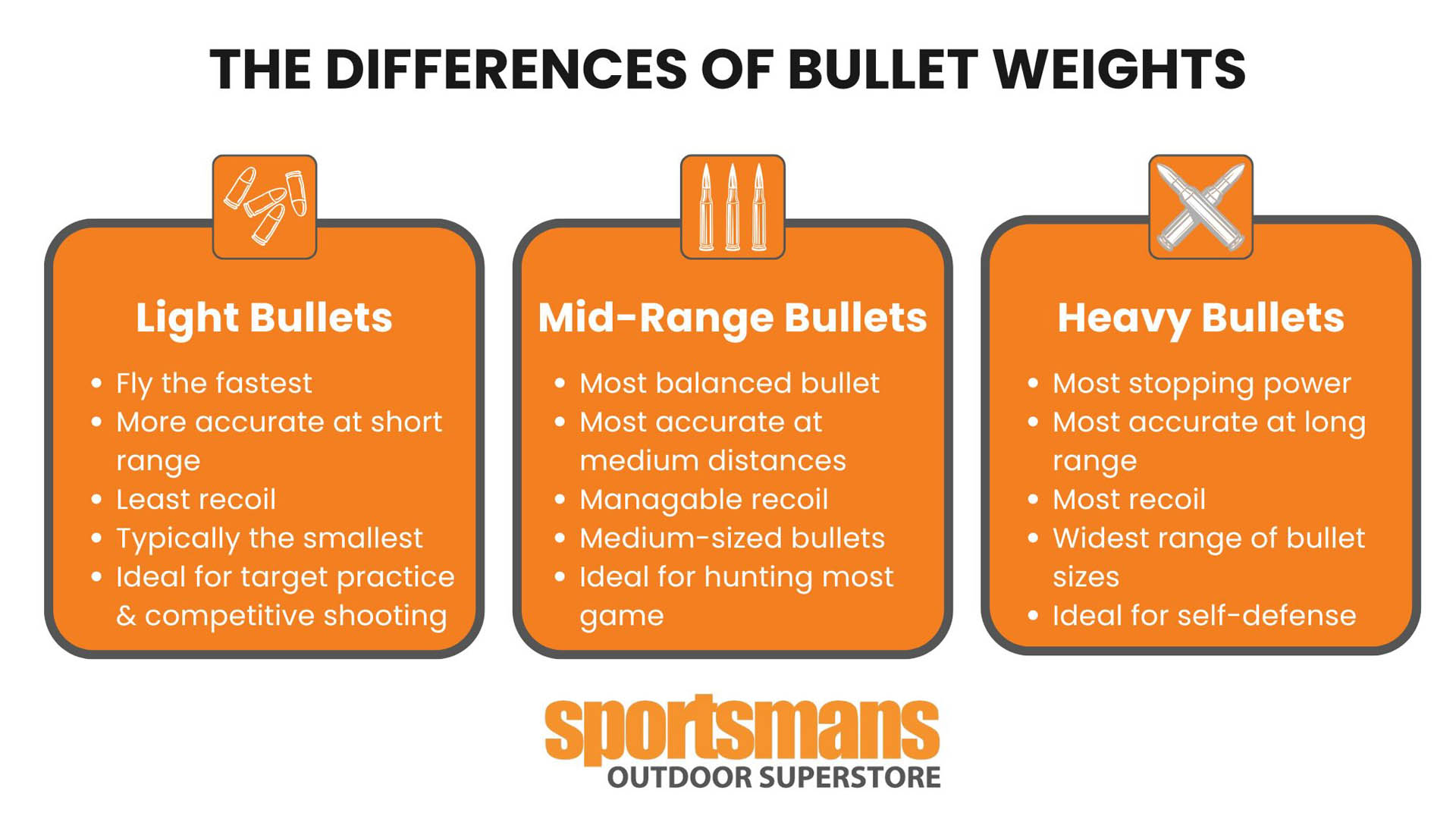
Bullet weight, measured in grains, affects firearm performance in terms of speed, accuracy, and impact.
Light Bullets
- Faster and more accurate at short range.
- Less recoil, making them easier to control.
- Ideal for target practice and competitive shooting.
Mid-Range Bullets
- A balance of speed, accuracy, and stopping power.
- Used in situations where both penetration and manageable recoil are needed.
- Common in some hunting and self-defense scenarios.
- More stopping power and deeper penetration.
- More recoil, harder to control.
- Preferred for hunting larger game and some self-defense.
- Self-Defense: Heavier bullets for better stopping power.
- Target Practice: Lighter bullets for affordability and manageable recoil.
- Hunting: Mid-range or heavier bullets for better penetration on larger game.
- Full Metal Jacket (FMJ): A soft lead core encased in a hard, thin outer layer, usually made of copper. FMJ bullets are designed for reliable feeding, penetration, and minimal expansion. They are most commonly used in military applications and for target practice.
- Total Metal Jacket (TMJ): Similar to FMJ, but the lead core is fully encased in a jacket, including the base of the bullet. TMJ bullets are cleaner, as the lead is fully contained, making them ideal for indoor shooting ranges and environments that require reduced lead exposure.
- Copper-Jacketed: These bullets feature a softer lead core with a thicker copper jacket, often used for hunting and self-defense. The thicker jacket allows for better expansion, creating more damage upon impact, especially in soft tissue.
- Semi-Jacketed: The bullet has a partial jacket that covers part of the lead core, leaving the tip exposed. Semi-jacketed bullets provide controlled expansion and are commonly used in hunting for medium to large game.
Heavy Bullets
Choosing Bullet Weight
Jacket Types
The jacket is the outer layer that surrounds a bullet’s core, influencing its performance in various ways. Here's a breakdown of the most common jacket types:
Find the Right Ammo for You!
Now that you know how caliber, bullet weight, and bullet types affect performance, it’s easier to choose the right ammunition for your needs. Each type of ammo serves a specific purpose, from target practice to self-defense or hunting, so be sure you get the right kind of ammo for the situation.
Explore Sportsman’s Outdoor Superstore for a wide selection of high-quality ammunition. Whether you’re looking for reliable ammo for the range, protection for personal defense, or something more specialized for hunting, we have the right option for you. Shop now and find the perfect ammo for your shooting needs.

About the Author
Mike Thompson is an avid outdoorsman and firearms enthusiast. With years of experience in hunting and shooting sports, he offers insights on gear reviews, safety tips, and hunting strategies. When he's not writing, you'll find him exploring new trails or honing his marksmanship.